

Light Cellar
The Resilient Pantry - Join the Wait List
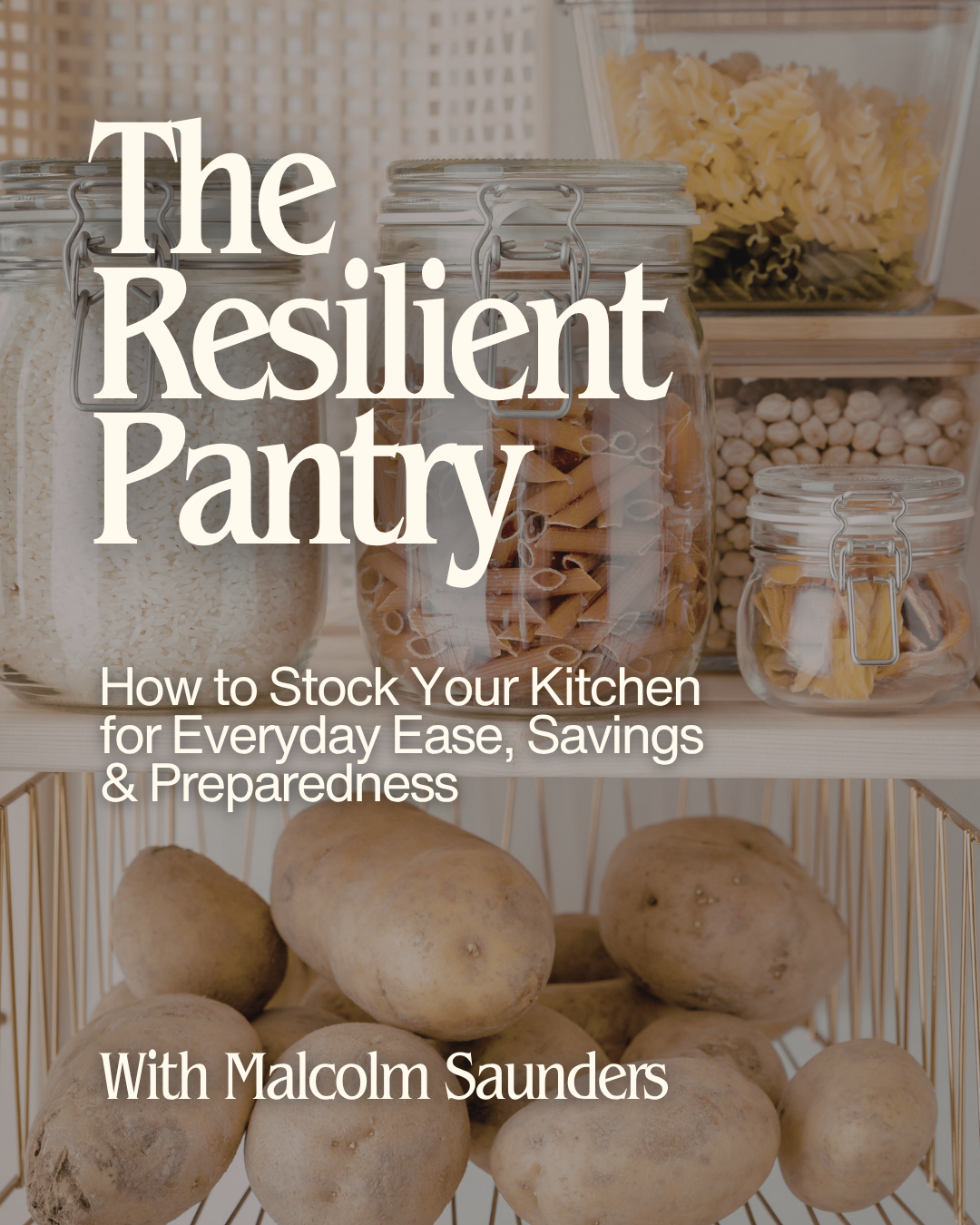
The Resilient Pantry
How to Stock Your Kitchen for Everyday Ease, Savings & Preparedness
Feature Class — Choose Your Format
New 2026 Date Coming Soon
90-Minute Session
Join the waitlist for the next live class. Pre-registration is free, and you'll be among the first to know when the next date is announced.
Choose Your Experience
In-Person Experience — $49
Online Experience — $29
In-Person: Light Cellar Teaching Kitchen (limited seats)
Online: Live via Zoom
A well-stocked pantry makes everyday life easier—and unexpected situations far less stressful
Preparedness doesn't have to mean fear, stockpiling, or filling your basement with emergency food.
At its best, it's simply good household stewardship.
A thoughtfully stocked pantry can help you make meals when you haven't been shopping, buy staple foods when they're most economical, reduce unnecessary trips to the store, preserve seasonal abundance, and feel more resilient when weather, illness, shortages, or other unexpected events interrupt everyday routines.
Join Malcolm Saunders for a practical approach to building a pantry that you actually use.
Rather than buying emergency foods that sit untouched for years, you'll learn how to create a rotating pantry of nourishing staples that supports your everyday life while quietly building greater resilience in the background.
In this class, you'll learn:
- How to determine how much food makes sense to keep on hand
- Which foods make the best pantry staples—and which don't
- How to build your pantry gradually without spending a fortune
- How to create a working pantry where stored food is continually used and replenished
- How to buy staples in larger quantities when it makes practical and financial sense
- The fundamentals of food rotation and storage
- How to think about shelf life without becoming overwhelmed
- Ways to preserve seasonal foods for later use
- How to balance dry goods, preserved foods, frozen foods, and everyday staples
- How to build greater food resilience even in a small home or apartment
- Practical considerations beyond food that contribute to a more resilient household
Preparedness you actually use
One of the biggest mistakes in preparedness is buying a collection of things specifically for an emergency.
There's another approach:
Store what you eat. Eat what you store.
Your everyday pantry becomes your preparedness pantry.
Rice, beans, grains, dried foods, herbs, spices, fermented foods, preserves, nourishing fats, broths, chocolate, superfoods and other staples can all become part of a rotating system that serves you today while creating a buffer for tomorrow.
The goal isn't scarcity thinking.
It's having enough that you don't need to panic when everyone else does.
Practicality + Preparedness + Prosperity
We'll look at the pantry through three lenses:
Practicality
Make everyday cooking easier by having versatile ingredients available when you need them.
Preparedness
Create greater household resilience for disruptions both large and small.
Prosperity
Learn when buying larger quantities, preserving food, reducing waste, and planning ahead can save money over time.
Small space? You can still do this.
You don't need a basement, acreage, or enormous pantry.
As one previous participant shared:
“Even in my tiny condo I can use many of these suggestions.”
— Debbie T.
The principles can be adapted to your household, available space, budget, and lifestyle.
What previous participants have said:
“This is so helpful... such a wealth of knowledge. Really appreciate this class!”
— Robyn L.
“This was great!”
— Cindy C.
Who this is for:
- Anyone wanting a more organized and useful pantry
- Families wanting to keep more nourishing food on hand
- People interested in preparedness without fear-based “prepping”
- Anyone wanting to buy staple foods more economically
- People interested in food preservation and household resilience
- Apartment and condo dwellers wondering what is realistically possible in a small space
- Anyone who wants to feel less dependent on making a grocery run every few days
Instructor
with Malcolm Saunders
Founder of Light Cellar, author and educator with decades of experience exploring traditional foods, food preservation, self-reliance, wild foods, and practical approaches to creating greater resilience in everyday life.